GUIDES • PIXEL PRESS
Beginner's guide: survive your first night in any survival game
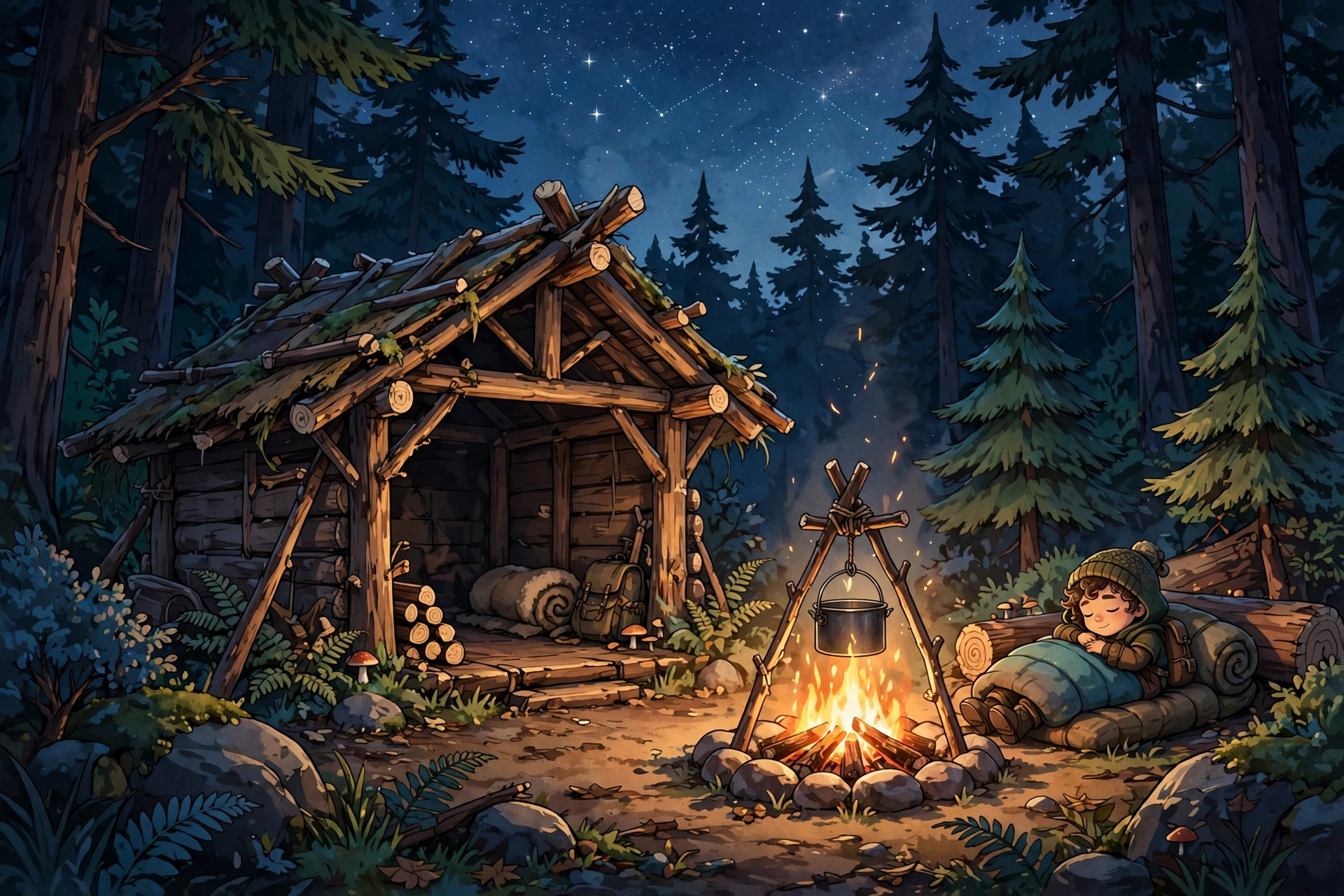
Build a shelter before dark, save your food, keep a light handy, and never chase a noise you cannot see. These five habits will save most new players.
Your first job is shelter, not loot. Find a safe spot, build a simple base, and make a bed if the game allows it.
Save food and water for the night. Eat early, carry a light, and stay close to home after dark.
If you hear something you cannot see, do not chase it. Wait, listen, and live to explore tomorrow.
Your first hour: the order that saves you
Every survival game looks different, but the first hour follows a similar rhythm, and learning that rhythm is more valuable than memorising one game map. When you spawn, resist the urge to sprint in a random direction and grab everything you see. Instead, spend the first few minutes learning the basics: how to move, gather, craft, and check your health, hunger, thirst, and temperature. Most games teach these through early prompts or a simple starting quest — follow them, even if they seem slow. They are teaching you the tools you will rely on all night. While you learn, keep an eye on the time of day. In many survival games, daylight is your working time and night is your hiding time, so the clock, not your inventory, should set your priorities.
A good first-hour order looks like this. First, gather the simplest resources near your spawn: wood, stone, or whatever the game uses for basic tools. Second, craft a basic tool and a simple weapon if the game allows it, even a weak one, because a weak weapon is far better than none when something approaches. Third, look for water and a small amount of food, but do not spend the whole day hunting. Fourth, choose a shelter spot while you still have daylight to build. Players who spend all day exploring and only think about shelter when the sky darkens are the players who spend their first night running, cold, and unprotected. A modest shelter built early beats an ambitious base that is only half finished at sunset.
Choosing and building a first shelter
Your first shelter does not need to be impressive; it needs to be safe, close to resources, and finished before dark. Look for flat ground near trees and water, but not so close to a dangerous area that enemies wander in while you sleep. A small hill, a cave entrance you can block, or a clearing with a clear view in all directions are all good starting points. Avoid building in the middle of a path that creatures use, and avoid a spot so remote that every trip for wood takes half a day. In a game with building blocks, start with four walls, a roof, a door, and a light source, and only then think about decoration or expansion. Our block-building guide covers that step-by-step building mindset in more detail, and it pairs well with survival play because both reward patience and planning over rushing.
Inside the shelter, prioritise a bed or sleeping spot, a storage container, and a crafting station if the game uses one. A bed often lets you skip the night safely or set a respawn point, which turns a dangerous night into a manageable one. Storage matters because a full inventory slows you down and forces hard choices in the dark. Put extra food, wood, and tools in storage before nightfall, keep a weapon and a light within reach, and close the door. If the game has a fire or furnace, learn how to fuel it early — warmth and cooked food are often more valuable than another weapon upgrade on the first night. Players who enjoy a calmer pace after surviving the night may also like our cozy gaming guide, while those who want bigger worlds to explore next can read our open-world guide.
Food, water, light, and health
Survival games test several needs at once, and beginners often focus on only one. Hunger is obvious because the bar drops, but thirst, cold, and health can kill you just as quickly. Eat before you are starving, drink before you are parched, and carry a little extra of each when you leave shelter. Cooked food usually restores more health and lasts longer than raw food, so learn the cooking step as soon as you can. If a food item looks risky or the game warns you about it, trust the warning on your first night; experimenting with unknown mushrooms or meat is a lesson best learned when you have a safe base to recover in, not when you are already cold and far from home.
What not to do on night one
The most common beginner mistakes are easy to list and easy to avoid once you know them. Do not chase a sound you cannot see, do not fight every creature you meet, and do not explore a dark cave on your first night. Do not carry everything you own — if you die far from home, you may lose the lot. Do not ignore the weather or temperature system if the game has one; rain, snow, or cold nights can drain health faster than a single enemy. And do not spend your last daylight hours decorating. A plain, finished shelter with food, water, and light is a successful first night, even if it looks boring in a screenshot. You can build something beautiful on day two, when you are alive to enjoy it.
For age guidance and content details before you choose a survival title, check ESRB or PEGI, and for one of the best-known building and survival worlds, visit Minecraft. If you want a complete beginner plan covering hardware, settings, and game choice together, our ultimate beginner gaming guide is a useful companion to this first-night plan.
Your first-night checklist
- Learn movement, gathering, crafting, and your health, hunger, thirst, and temperature bars in the first few minutes.
- Gather basic resources, craft a simple tool and weapon, and find a little food and water before midday.
- Choose flat, safe ground near trees and water, and finish walls, roof, door, and light before dark.
- Place a bed, storage, and crafting station inside, stock extra food and fuel, and keep a weapon and light handy.
- Stay near shelter after dark, cook food where possible, heal before exploring again, and never chase an unseen sound.
Survival first-night FAQ
Should I explore or build first?
Build first, in a small way. A quick look around your spawn is useful, but a finished shelter before dark matters more than a long journey on day one. Explore properly on day two, when you have a safe base to return to.
What if night falls before my shelter is ready?
Do not panic. Find the safest spot you can, block an entrance if possible, keep your light on, stay quiet, and wait for daylight. A rough night survived is still a success, and you can finish the shelter in the morning.
How much food should I carry?
Carry enough for the night plus a little extra, and store the rest at base. Carrying everything risks losing it all, while carrying nothing leaves you hungry far from help.
Is it okay to play survival games on easy difficulty first?
Yes, and it is a smart way to learn. Easy mode lets you practise gathering, building, and night routines without harsh penalties, and you can raise the difficulty once those habits feel natural.
All text on this post was written for Pixel Press. No content was copied from another site.